
The Original Manufacturer Of LED lighting
 RioTinto
  2026-10-24


Outdoor lighting projects are becoming more creative, more connected and more customized. Today, landscape lighting contractors and project companies often need more than a standard white flood light. They need a flexible solution that can highlight trees, transform gardens, create colorful outdoor scenes and illuminate buildings for different occasions.
This is where an RGBW LED landscape flood light can make a significant difference.
However, choosing the right RGBW landscape light is not simply a matter of selecting the highest wattage or the brightest fixture. The right choice depends on several factors, including the application, installation voltage, required lighting output, control system and certification requirements.
In this guide, we explain how to choose the right RGBW LED landscape flood light for outdoor tree lighting, gardens, yards and architectural projects. We will also compare different wattages, voltage options and control systems to help lighting contractors and project buyers select a solution that fits their requirements.
An RGBW LED landscape flood light is an outdoor lighting fixture that combines four separate LED color channels:
✔Red
✔Green
✔Blue
✔White
The red, green and blue channels can be mixed to create a wide range of colors, while the dedicated white channel provides white illumination when colorful effects are not required.
This is an important advantage over traditional single-color landscape lights. With one RGBW fixture, a project can create vibrant color-changing effects for special events, holidays or entertainment while also providing practical white lighting for everyday use.
For example, the same outdoor landscape can use warm or neutral white light during normal operation and switch to colorful scenes for Christmas, Independence Day, weddings, parties or other special events.
This flexibility makes RGBW landscape lighting suitable for professional outdoor projects where both decorative effects and functional illumination are important.
Typical applications include tree lighting, gardens, residential yards, hotels, resorts, commercial landscapes and building façades.
https://www.szriotinto.com/LED-Landscape-Flood-Light/
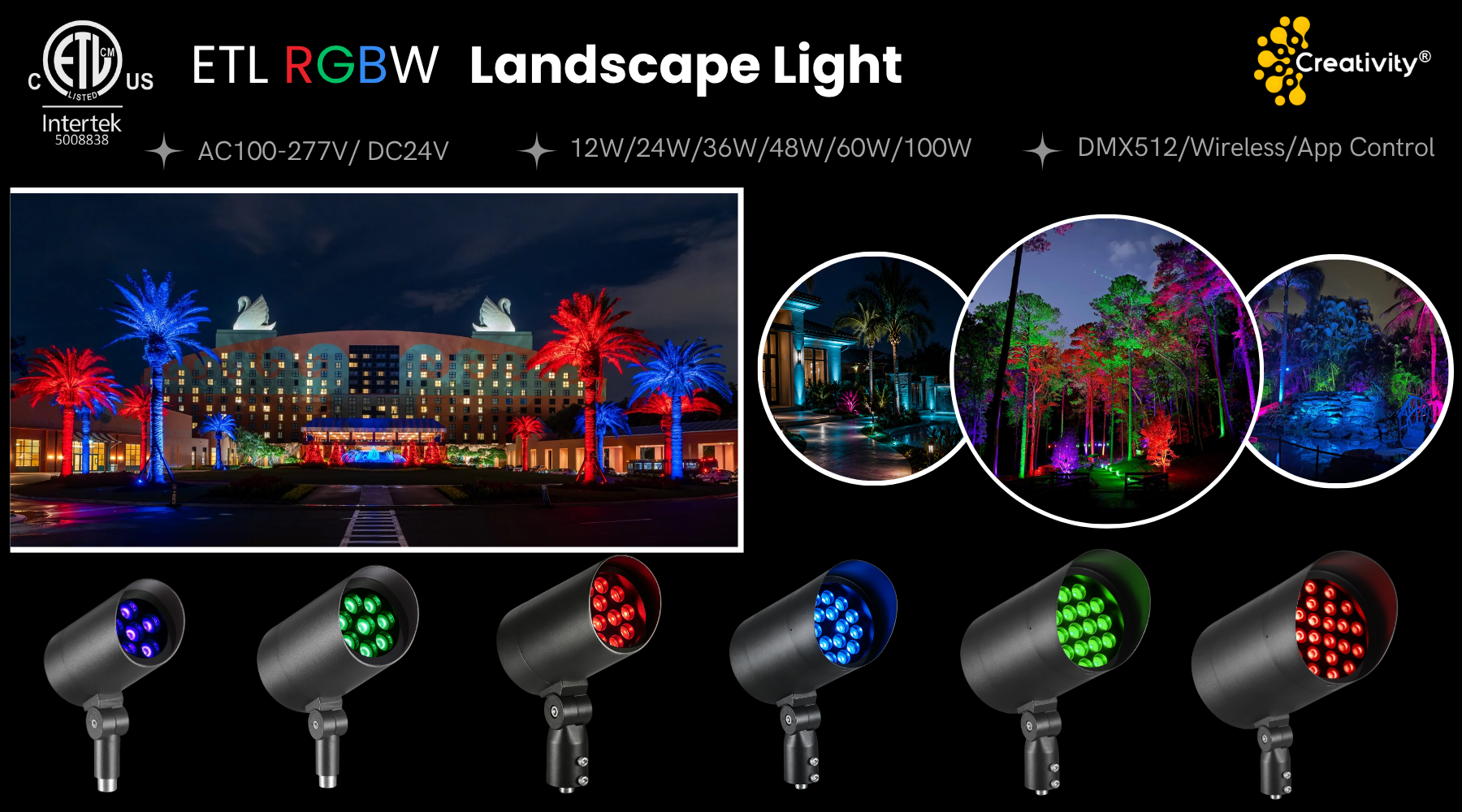
When selecting a color-changing landscape flood light, one of the first questions is whether RGB or RGBW is the better option.
A standard RGB light uses red, green and blue LEDs to create different colors. It can also create a version of white by mixing the three colors. However, RGBW lighting adds a dedicated white LED channel.
The additional white channel provides greater flexibility for outdoor lighting projects.
First, it allows the fixture to produce white light without relying entirely on RGB color mixing. Second, it gives contractors and lighting designers the ability to use one fixture for both colorful effects and general landscape illumination.
For projects that operate throughout the year, this can be especially useful.
A garden may use white lighting most evenings but require colorful lighting during holidays. A hotel landscape may use elegant white lighting on normal days and switch to dynamic colors for events. A commercial building may require architectural white lighting while also using RGB effects for celebrations or promotional activities.
For these applications, an RGBW LED landscape flood light offers more versatility than installing separate RGB and white fixtures.
Wattage is one of the most important considerations when choosing an outdoor RGBW flood light.
However, selecting a higher wattage does not automatically mean it is the right choice. The required power depends on the size of the object being illuminated, installation distance, beam angle, surrounding ambient light and desired visual effect.
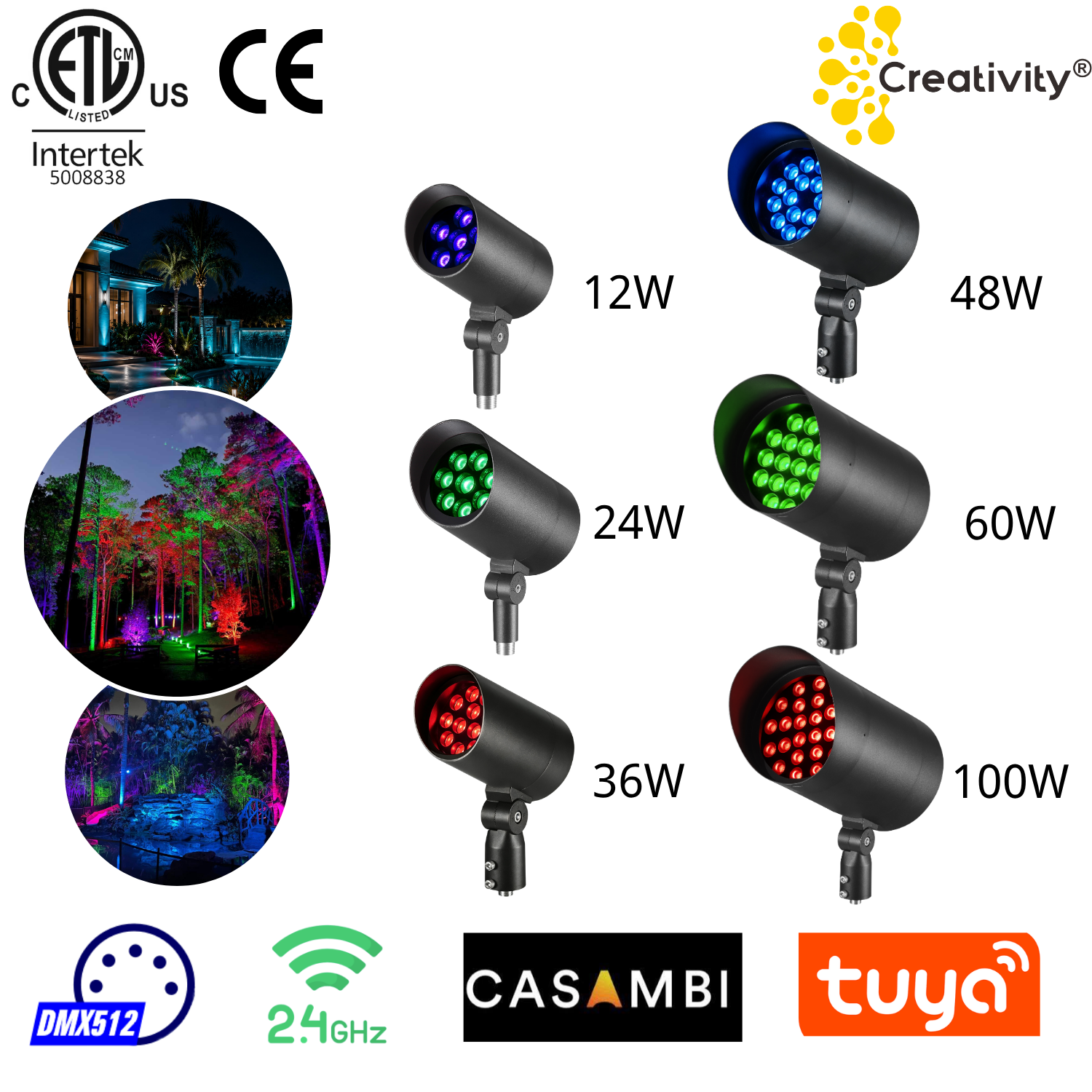
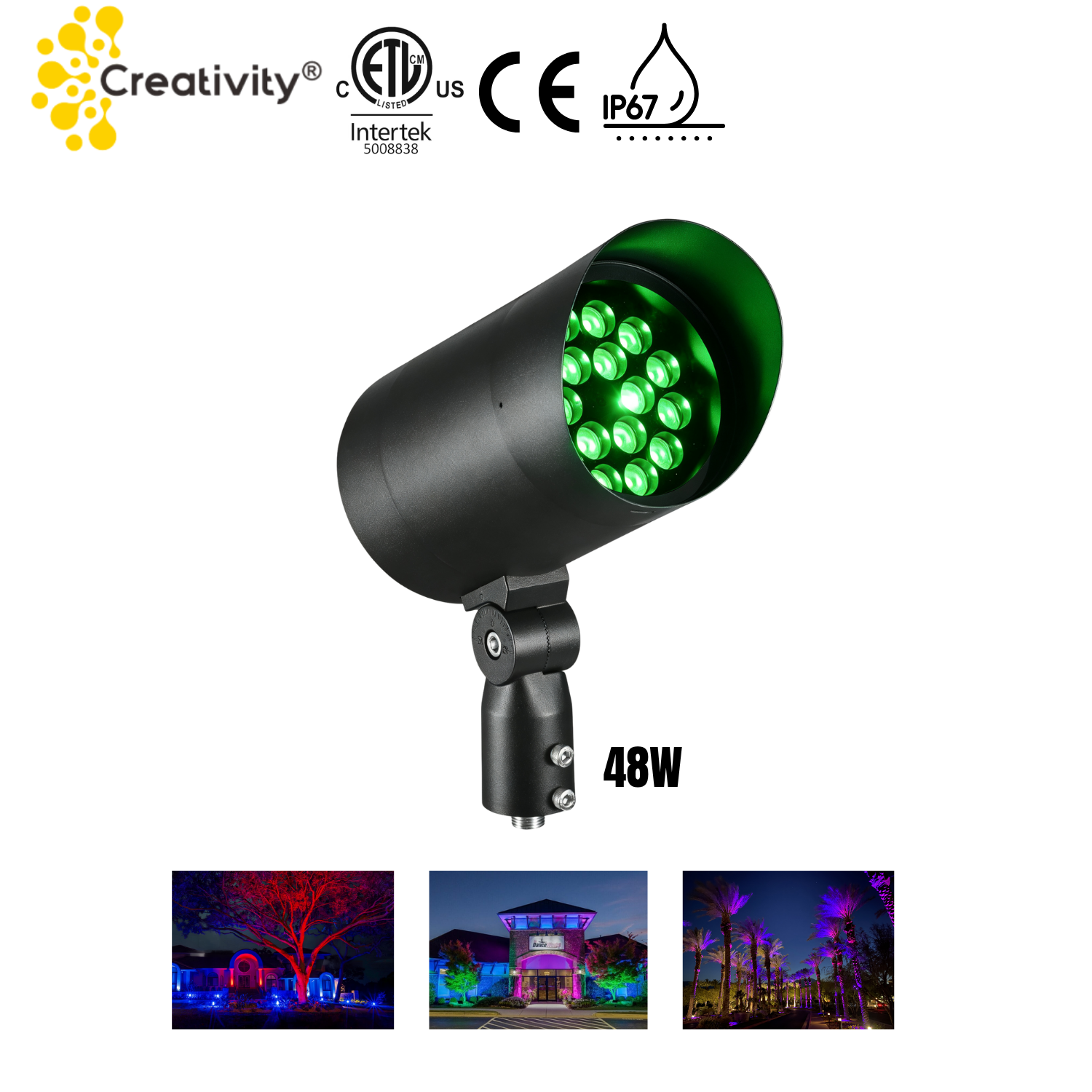
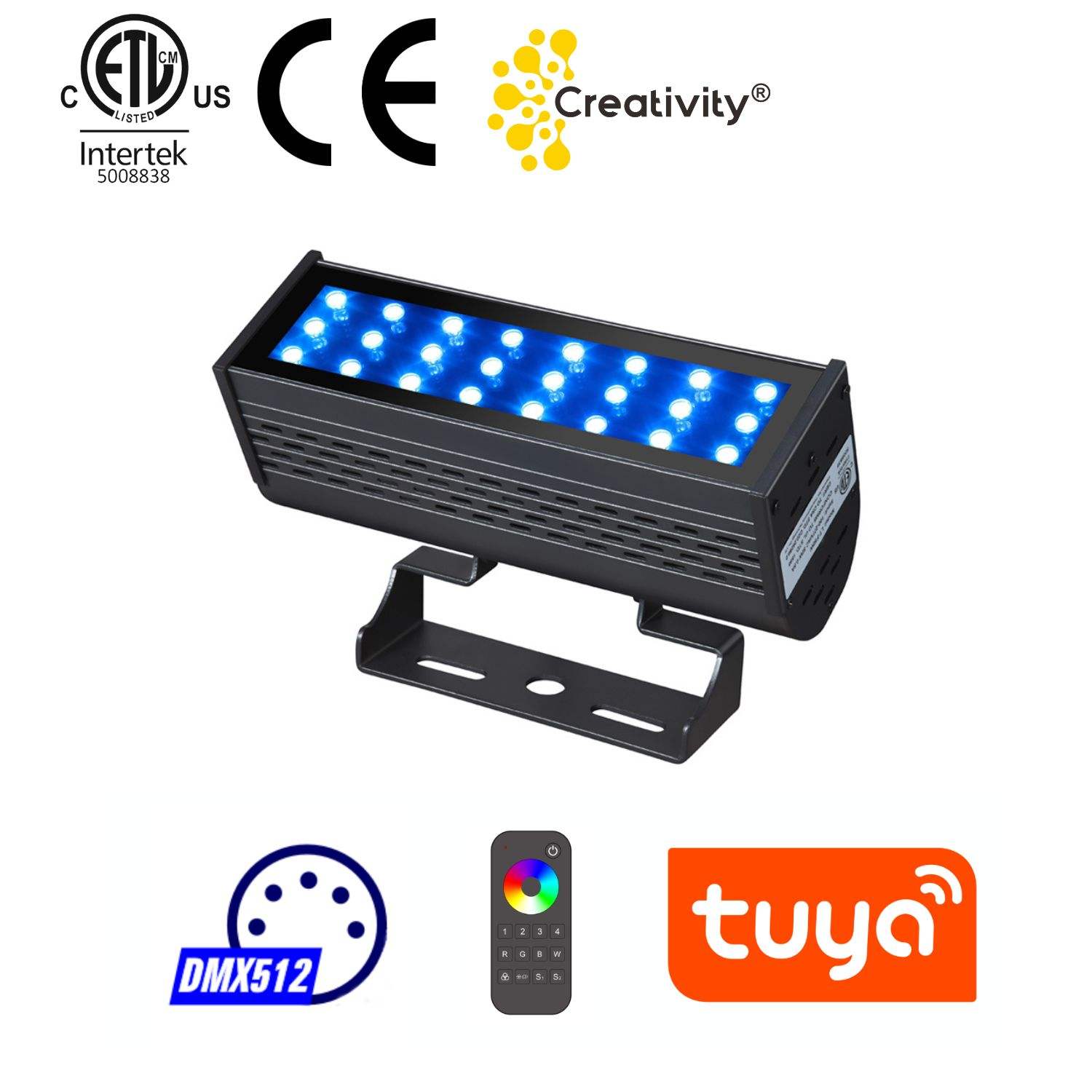
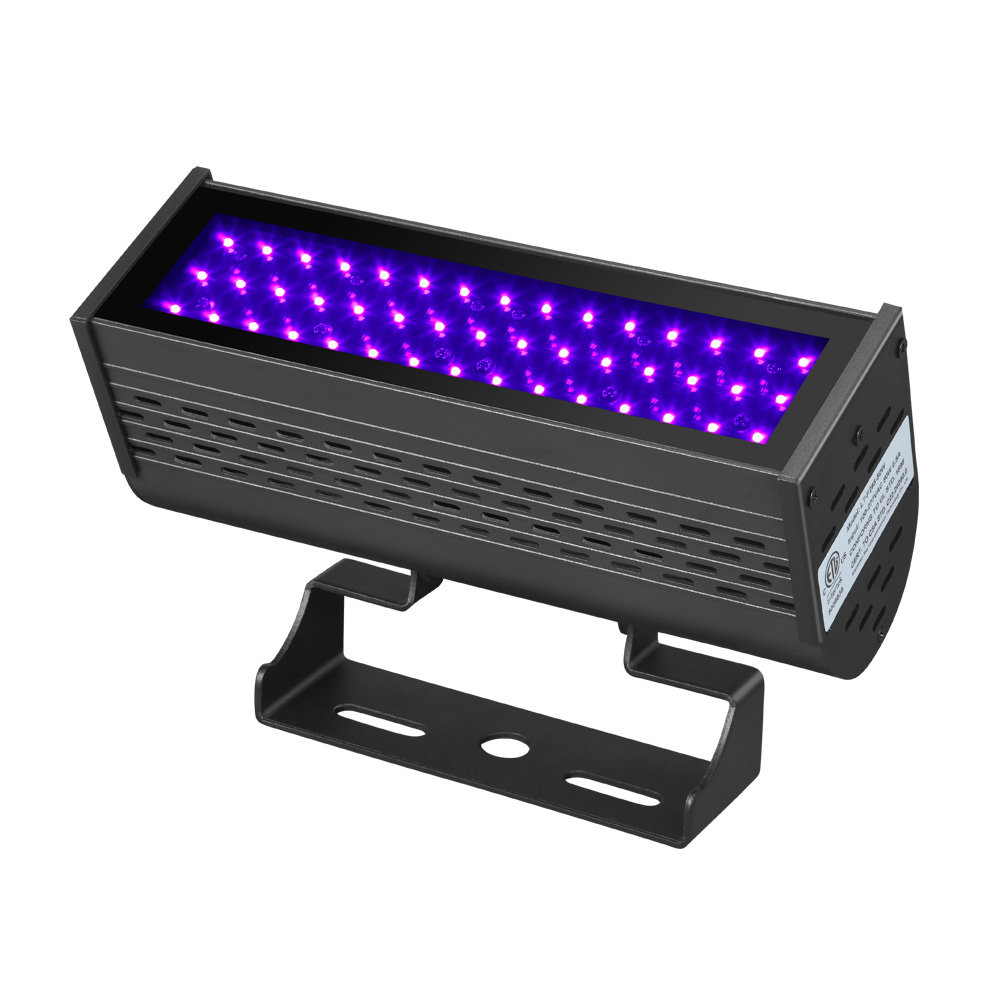
Creativity offers RGBW LED landscape flood light options including:
✔12W
✔24W
✔36W
✔48W
✔60W
✔100W
Lower-wattage RGBW landscape flood lights are often suitable for smaller-scale applications.
They can be used to illuminate small trees, shrubs, plants, garden sculptures, landscape features and other decorative elements.
For a residential garden, using multiple lower-power fixtures can sometimes create a more balanced lighting effect than using one powerful flood light. This approach also gives designers more flexibility when positioning and controlling different areas.
These options are particularly suitable when the goal is accent lighting rather than long-distance projection.
Medium-power RGBW flood lights provide a stronger lighting output for larger trees and outdoor spaces.
Typical applications include medium-sized trees, residential yards, garden focal points, landscape walls, outdoor entertainment areas and commercial landscaping.
For many professional landscape projects, 36W and 48W models can provide a useful balance between lighting performance and fixture quantity.
The final selection should still consider installation distance and beam coverage. A larger tree with a wide canopy, for example, may require multiple fixtures from different directions rather than one flood light positioned too far away.
Higher-wattage RGBW landscape flood lights are designed for applications requiring more powerful illumination.
They can be suitable for large trees, commercial landscapes, building exteriors, architectural façades and larger outdoor project areas.
A 60W or 100W fixture may be appropriate when the installation distance is greater or when a strong visual effect is required.
Before selecting a high-power fixture, contractors should evaluate the actual project conditions. Excessive brightness can create glare, uneven lighting or unnecessary energy consumption.
The best approach is to match the wattage with the size of the application and the desired lighting result.
Voltage is another important factor when selecting an outdoor RGBW landscape flood light.
Depending on the project, we offers AC100-277V and DC24V options.
An AC100-277V RGBW flood light is suitable for projects that use a wide-voltage AC electrical system.
This option can be useful for commercial properties, architectural lighting installations and professional outdoor projects where the electrical infrastructure is designed around AC power.
Before installation, the contractor should always confirm the available power supply and local electrical requirements.
A DC24V RGBW landscape light is designed for projects using a low-voltage lighting system.
Low-voltage systems can be a practical option for many landscape lighting applications. They may allow centralized power distribution and can provide flexibility when designing an outdoor lighting layout.
The correct choice between AC100-277V and DC24V should be based on the electrical design of the project rather than simply on fixture preference.
Choosing the correct voltage at the beginning can help avoid unnecessary changes during installation.
RGBW landscape lighting becomes much more powerful when the control system matches the needs of the project.
Different projects require different levels of programming, synchronization and convenience. Creativity provides multiple control options, including DMX512, wireless remote, Casambi and Tuya.
DMX512 is a professional control solution for projects that require coordinated lighting effects across multiple fixtures.
It is particularly suitable for larger projects where different trees, landscape zones or architectural elements need to operate together.
With an appropriate lighting control system, DMX512 can be used to create static colors, smooth fades, color-changing sequences and synchronized lighting scenes.
For example, a building façade and surrounding trees can operate as part of one coordinated lighting program. Different fixtures can display different colors while remaining synchronized with the overall scene.
DMX512 is a strong option for landscape contractors and project companies that require advanced control and customization.
Casambi can be a suitable choice for smart lighting projects requiring flexible wireless control.
Depending on the project configuration and compatible equipment, it can provide convenient management of lighting groups and scenes.
For outdoor projects where simplified smart control is preferred over a more complex traditional control architecture, Casambi can be an attractive option.
It is important to select the control system according to the actual project requirements, installation environment and desired level of customization.
Tuya provides another smart control option for RGBW landscape lighting.
It can be suitable for applications where convenient management of colors, brightness and lighting scenes is important.
For smaller or more user-friendly smart lighting installations, this type of control can provide an accessible way to change the atmosphere of an outdoor space.
When choosing between DMX512, Casambi and Tuya, the key question is not which technology is universally better. The right choice depends on the project.
A large architectural lighting project may benefit from DMX512. A smart landscape installation may prefer Casambi or Tuya. Understanding how the customer wants to operate the lighting system is essential before selecting the fixture configuration.
Tree lighting is one of the most popular applications for color-changing outdoor flood lights.
The right fixture should be selected according to the height, width and shape of the tree.
Smaller trees may only require lower-wattage fixtures, while large trees with tall trunks and wide canopies may need more powerful models or multiple fixtures.
The installation position is equally important. Uplighting from the base of the tree can highlight the trunk and branches, creating depth and dramatic shadows.
For RGBW tree lighting, contractors should also consider whether the customer wants permanent color-changing effects or occasional special-event lighting.
A dedicated white channel can be especially valuable for projects that need a natural landscape appearance on normal days but colorful effects for holidays and celebrations.
Multiple fixtures may also be used to illuminate a large tree from different angles. This can create more even coverage and reduce overly dark areas.
Gardens and residential yards usually require a different approach from large architectural projects.
Instead of simply maximizing brightness, the goal is often to create atmosphere and visual layers.
A successful RGBW garden lighting design may use different fixtures to highlight trees, plants, pathways, walls and landscape features.
Lower and medium-power RGBW flood lights can be positioned throughout the space to create depth rather than concentrating all the lighting in one location.
Different zones can also use different colors.
For example, one area of a garden may use soft blue lighting while another highlights trees with green, purple or warm colors. During normal operation, the system can switch to white lighting.
When planning yard lighting, consider the viewing angle as well. A fixture should be positioned to highlight the intended object without producing unnecessary glare toward residents, visitors or neighboring properties.
For building lighting, the selection process should consider both the physical size of the structure and the visual purpose of the project.
Smaller architectural elements may only need medium-power fixtures, while large façades may require higher-power RGBW flood lights.
Installation distance and beam distribution should be carefully evaluated.
The goal may be to wash an entire wall with color or highlight specific features such as columns, entrances and architectural details.
Control is also particularly important for architectural projects.
A building may use one standard lighting scene during normal operation and change colors for special events. DMX512 can be useful when multiple fixtures need to operate as one coordinated system.
RGBW technology allows the same installation to provide both colorful visual effects and practical white architectural lighting.
For projects serving the U.S. and North American markets, certification can be an important part of product selection.
Lighting contractors and project companies may need products that meet specific safety and project requirements.
An ETL Listed RGBW LED landscape flood light can provide an appropriate option for customers and projects requiring this type of certification.
Before purchasing, buyers should confirm the exact certification requirements for the product configuration and the intended installation.
This is especially important for customized projects, because wattage, voltage and other configurations may differ.
For professional buyers, certification should be considered early in the product selection process rather than after the lighting design has already been completed.
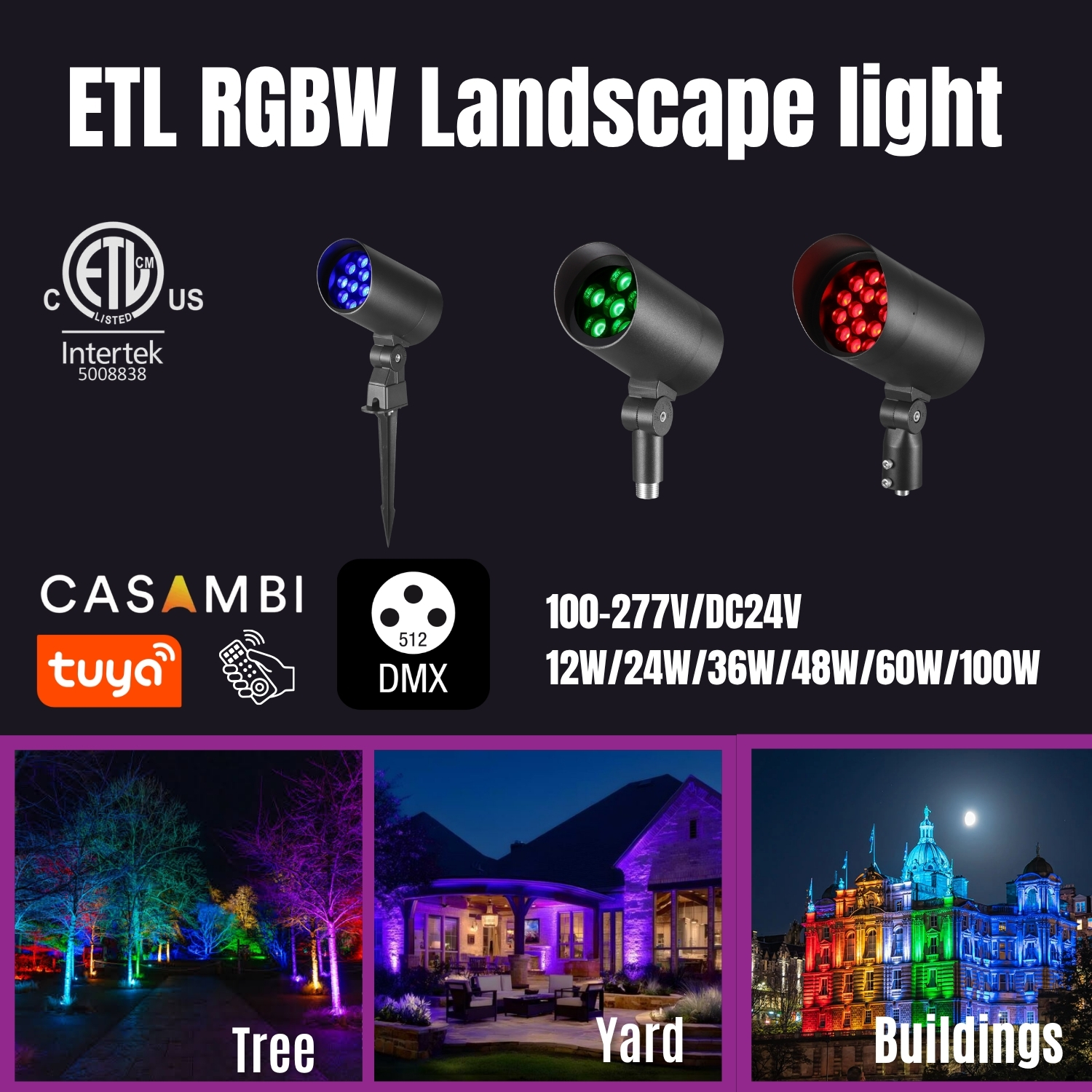
Before placing an order, project buyers should clearly define their requirements.
Ask the following questions:
What will the light illuminate?
Is the application a tree, garden, yard, building or other landscape feature?
How large is the target area?
The size of the object and installation distance will influence the required wattage and fixture quantity.
What power supply is available?
Determine whether the project requires AC100-277V or DC24V.
How will the lights be controlled?
Decide whether the project needs professional DMX512 control, wireless Casambi control or a Tuya smart lighting solution.
Is a dedicated white channel required?
If the project needs both colorful effects and everyday white illumination, RGBW can provide greater flexibility.
Are certification requirements specified?
Confirm whether the project requires an ETL Listed product.
Answering these questions before ordering can help contractors select a more suitable configuration and reduce unnecessary changes later in the project.
The right RGBW LED landscape flood light should match the actual requirements of the project.
There is no single wattage, voltage or control system that is best for every installation.
A small residential tree may require a completely different solution from a large hotel landscape or commercial building façade.
For this reason, professional project planning should consider the application, lighting distance, required output, voltage, control system and certification requirements together.
Creativity provides RGBW LED landscape flood light solutions in 12W, 24W, 36W, 48W, 60W and 100W options. Customers can choose AC100-277V or DC24V configurations, as well as DMX512, Casambi or Tuya control options according to project requirements.
Whether you are designing RGBW tree lighting, color-changing garden lighting, smart yard lighting or architectural façade illumination, selecting the right fixture configuration can help create a more flexible and effective outdoor lighting system.
If you are looking for an ETL Listed RGBW LED Landscape Flood Light for a U.S. outdoor lighting project, contact Creativity to discuss product specifications, control requirements and customized ODM solutions.

 sales@szriotinto.com
  +86 13928499082
 F2, Building SM2, Block B, Dingfeng High-Tech Industrial Park, Shangshijia, Guangming District, Shenzhen, China


 Whatsapp
 Wechat
